
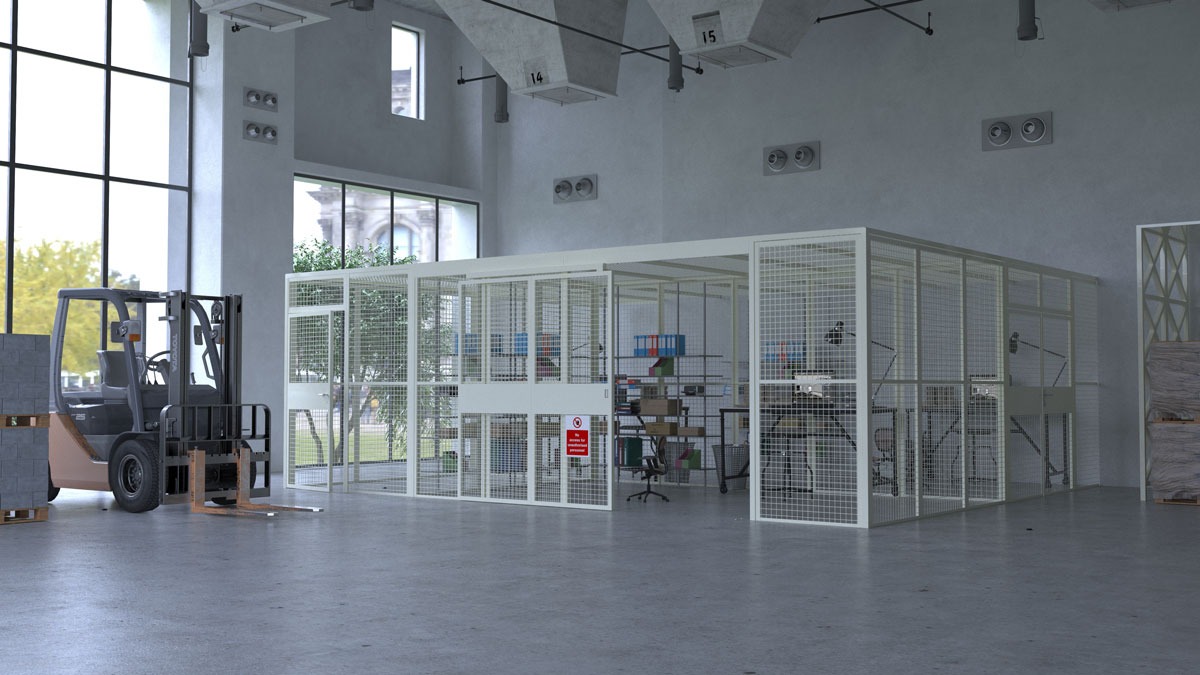
In the competitive landscape of logistics, manufacturing, and warehousing, efficiency and safety are non-negotiable.
Modern industrial facilities are vast, multi-functional spaces that must accommodate complex processes, expensive machinery, and diverse personnel.
The sheer scale of these environments necessitates a sophisticated approach to internal organisation and control.
Simply marking off areas with floor tape is insufficient when dealing with high-value stock, automated machinery, or the need to segregate different workflows.
The solution lies in creating defined, controlled, and secure zones that are easily integrated into the existing structure: industrial partitioning.
Amongst the options available, mesh partitioning stands out as the most versatile, cost-effective, and safe choice for delineating space without compromising essential visibility or airflow.
It represents a smart, modular investment that supports both operational workflow and stringent health and safety compliance, transforming an open warehouse floor into a highly functional, multi-purpose environment.
The Versatility and Design of Mesh Partitioning Systems
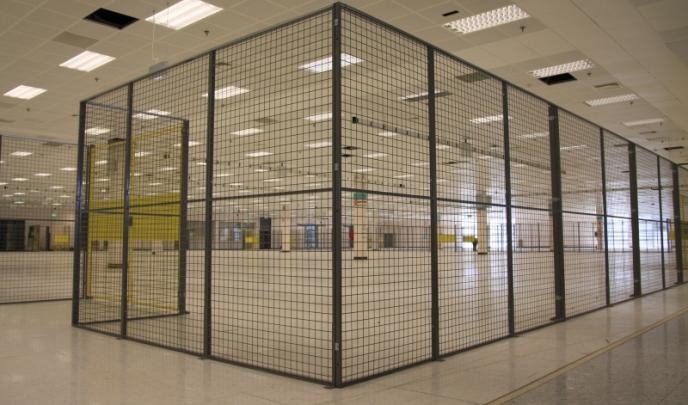
Mesh partitioning systems are engineered solutions designed to segment industrial spaces using robust wire mesh panels.
These panels are typically constructed from high-quality steel wire, resistance-welded to form a strong, rigid grid structure, often finished with a durable powder coating for resilience against impact, corrosion, and wear.
Modular and Adaptable Construction
The core benefit of these systems is their modular design.
They consist of standardised panels, posts, doors, and locking mechanisms that can be rapidly assembled to create any configuration required, from small machine guards to extensive bonded storage cages that span the length of a facility.
This adaptability allows businesses to:
- Reconfigure Layouts: As operational needs change, the panels can be quickly dismantled and re-erected in a new formation, offering a future-proof solution far superior to permanent, solid walls.
- Scale Up: The system can be easily expanded by simply adding more standard components, allowing the partitioning to grow seamlessly with the business.
Maintaining Visibility and Airflow
Unlike solid blockwork or plasterboard walls, mesh offers uninterrupted visibility throughout the facility.
Supervisors can oversee operations and monitor machinery from a distance, enhancing security and safety oversight.
Crucially, the open nature of the mesh facilitates excellent ventilation and the unobstructed flow of light, ensuring that segregated areas do not become damp, poorly lit, or subject to poor air quality, which is vital for both stock preservation and employee well-being.
Enhancing Safety and Security in Industrial Environments
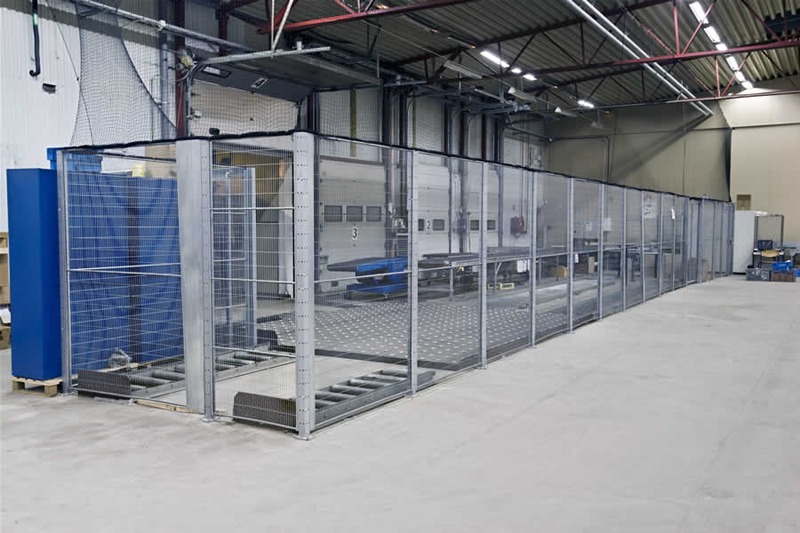
The primary driver for implementing industrial partitioning is often the need to manage risk—both to personnel and assets. Mesh systems are indispensable tools for achieving strict adherence to health and safety regulations.
Machine Guarding and Isolation
In manufacturing environments, machinery guarding is paramount.
Automated and semi-automated production lines pose inherent risks to operators.
Mesh partitioning is used to create secure perimeter fences around dangerous equipment, ensuring that workers cannot access moving parts during operation.
Interlocking doors and safety switches can be integrated into the system, ensuring that machinery automatically shuts down if a door is inadvertently opened, thereby complying with PUWER (Provision and Use of Work Equipment Regulations) standards.
Segregation of Hazardous Areas
Certain materials, chemicals, or processes require complete separation from the general workforce and other non-compatible processes.
Mesh walls allow for the creation of hazardous storage zones or quarantine areas where access can be strictly controlled via coded or keyed locks.
Whilst providing the necessary physical barrier, the mesh construction also allows for clear visual inspection of the area without physical entry, ensuring immediate notification in case of spills or issues.
This segregation is vital for reducing the risk of accidents and managing emergency responses effectively.
Optimising Warehouse Operations and Inventory Control
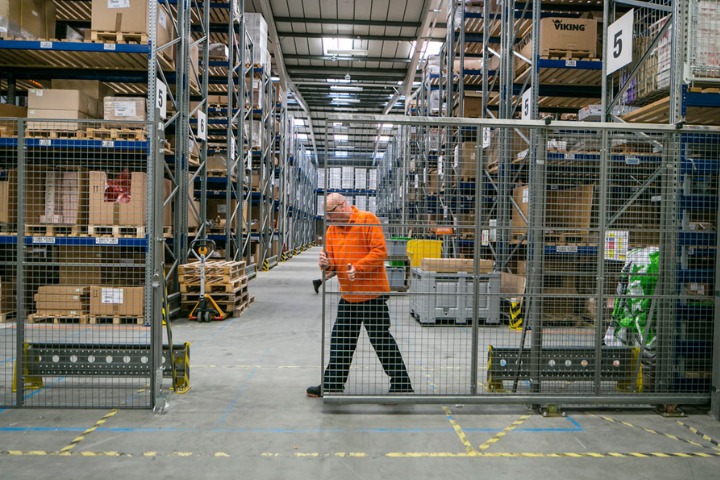
Beyond safety, strategic partitioning dramatically improves the operational flow and financial accountability within a warehouse or distribution centre.
Secure Storage for High-Value Goods
Pilfering and unauthorised access to high-value stock, IT equipment, or sensitive documents can lead to significant financial losses.
Creating a dedicated, locked secure storage cage within the warehouse prevents casual theft and facilitates stringent inventory audits.
Only authorised personnel are granted access, which simplifies accountability and reduces shrinkage.
The robust steel construction of the partition acts as a formidable deterrent, safeguarding critical assets.
Creating Bonded and Quarantine Zones
In customs-regulated environments, or those dealing with damaged or recalled items, bonded stores and quarantine areas are mandatory.
Mesh partitioning is the ideal material for these applications because its visibility makes the contents clear for inspection (e.g., by customs officers) without requiring the security seal to be broken.
Furthermore, having a clearly defined and secured quarantine area for rejected or quality-control stock prevents accidental shipping or reintroduction into the main inventory stream.
For companies seeking to segment their floor space efficiently and securely, investing in high-quality industrial mesh partition systems provides the flexibility and durability required for demanding environments.
Ease of Installation and Future Flexibility
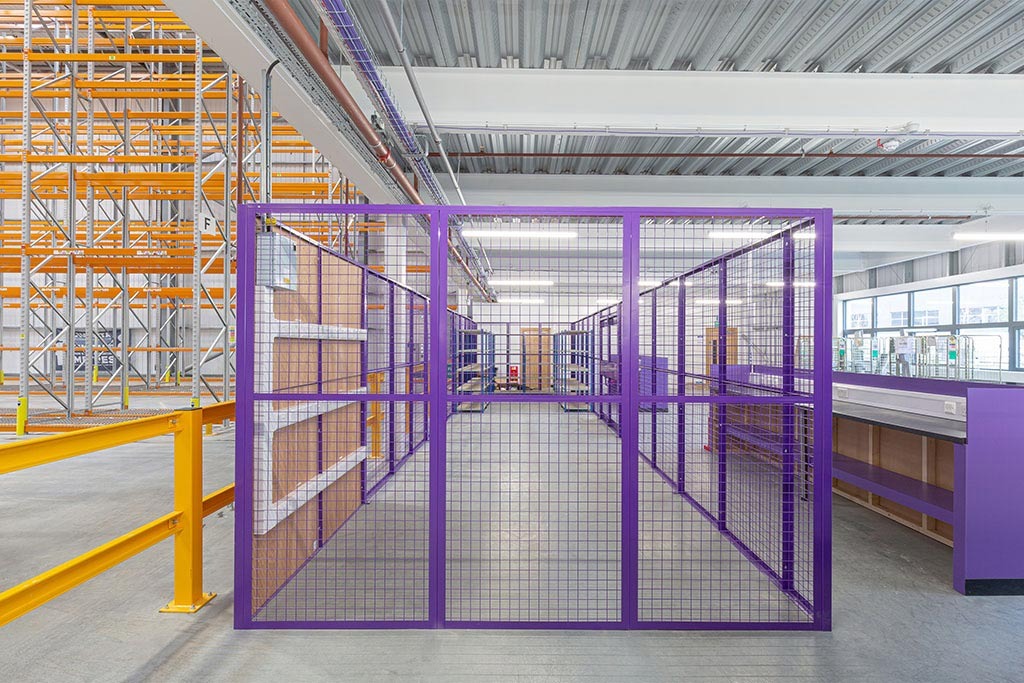
One of the significant advantages of mesh partitioning over traditional walling solutions is the speed and simplicity of installation.
Because the system is modular and typically bolted together, installation is relatively quick, causing minimal disruption to ongoing operations.
There is no need for wet works, extensive structural modifications, or lengthy curing times.
This modularity ensures that the initial layout is never final.
Should a company need to relocate, expand, or simply change its internal configuration to accommodate new machinery or workflows, the mesh partitioning can be reconfigured and reinstalled with ease.
This future flexibility means the system remains a valuable, reusable asset throughout the lifetime of the facility, providing a far better return on investment than static building elements.
Conclusion: A Smart Investment in Operational Efficiency
In today’s industrial settings, effective space management is synonymous with operational excellence.
Mesh partitioning provides a robust, adaptable, and cost-effective method of achieving mandatory safety compliance, enhancing security, and streamlining operational flow.
It ensures that personnel, inventory, and machinery are correctly segregated, managed, and protected.
By investing in high-quality, modular mesh systems, businesses gain not only physical barriers but also a dynamic tool for optimising their floor space.
They improve inventory control, mitigate safety risks, and maintain the necessary visibility and ventilation that is critical for a safe, productive working environment.
For any industrial facility aiming for maximum efficiency and security, mesh partitioning is the definitive choice for intelligent space segregation.